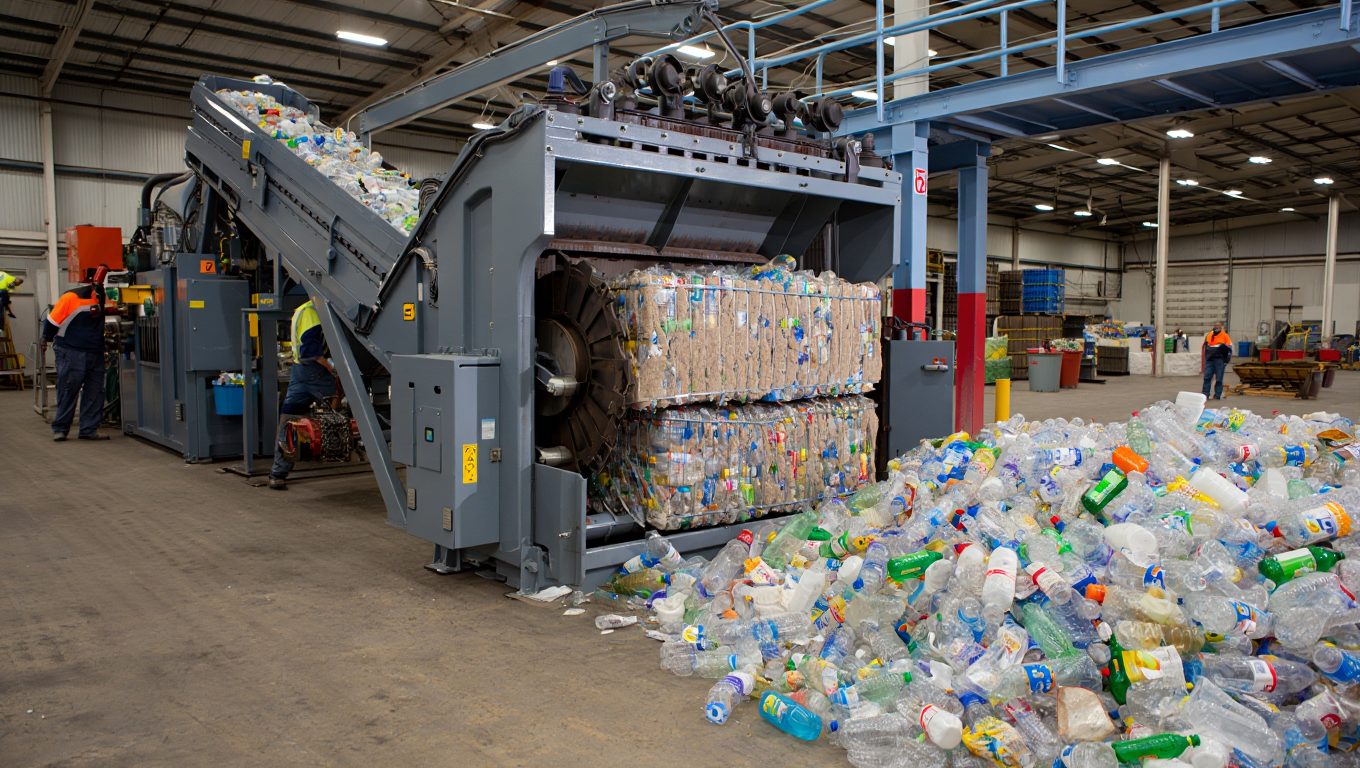
The right baler machine reduces waste costs, improves efficiency, and increases recycling revenue. Choosing the correct size and type depends on your material volume, waste stream, and facility layout. Businesses that select the right industrial baler often see immediate operational improvements and long-term return on investment.
- Match baler size to your waste volume
- Choose vertical or horizontal based on throughput needs
- Prioritize durability, safety, and service support
- Plan for future growth and scalability
What Is a Baler Machine?
A baler machine is equipment that compresses recyclable materials such as cardboard, paper, plastics, and aluminum into dense, compact bales. These bales are easier to store, transport, and sell, making balers essential for efficient waste and recycling management.
Why Businesses Invest in Industrial Balers
Businesses generate recyclable waste daily. Without proper handling, these materials increase disposal costs and take up valuable space.
- Reduce waste hauling frequency
- Lower disposal costs
- Improve warehouse organization
- Enhance workplace safety
- Create revenue from recyclables
- Support sustainability goals
Facilities using properly sized balers often achieve measurable cost savings within the first year.
Step 1: Evaluate Your Waste Stream
Start by identifying the materials and volume your facility generates. This determines the correct baler type and capacity.
Common Recyclable Materials
- Cardboard and corrugated boxes
- Office and mixed paper
- Plastic film and shrink wrap
- PET and HDPE containers
- Aluminum cans
- Textiles or specialty materials
Key Questions to Ask
- How much material do you generate weekly?
- What materials dominate your waste stream?
- Do materials need separation?
- Will your volume increase over time?
Accurate assessment prevents under-sizing or unnecessary overspending.
Step 2: Choosing the Right Baler Size
Small Vertical Balers
Best for low to moderate volumes in retail or small facilities.
- Compact footprint
- Lower baler machine cost
- Easy operation
Typical bale weight: 50 to 500 pounds.
Mid-Size Vertical Balers
Designed for moderate to higher volume operations.
- Greater compaction force
- Improved efficiency
- Larger bale sizes
Typical bale weight: 500 to 1,000 pounds.
Large Vertical and Horizontal Balers
Used in high-volume industrial environments.
- High throughput capacity
- Automation capabilities
- Reduced labor requirements
Horizontal balers can produce bales exceeding 1,000 pounds.
Step 3: Vertical vs Horizontal Baler
Vertical Balers
- Lower upfront cost
- Smaller footprint
- Manual operation
Best for moderate volumes and limited space.
Horizontal Balers
- High-volume capability
- Automated feeding options
- Consistent bale output
Best for continuous, high-output operations.
For businesses scaling operations, reviewing available new recycling equipment options can help identify the right system configuration.
Step 4: Understanding Baler Machine Cost
Baler pricing varies based on size, automation, and build quality.
- Small vertical balers: lower cost entry point
- Mid-size units: moderate investment
- Horizontal balers: higher upfront cost with long-term savings
Total cost may include installation, electrical work, and site preparation. Some businesses also explore used equipment options to reduce initial investment.
Step 5: Key Features to Consider
Compaction Force
Higher force creates denser bales, improving storage efficiency and recycling value.
Automation Level
Manual, semi-automatic, or fully automatic systems impact labor and productivity.
Safety Features
- Interlocked doors
- Emergency stop controls
- Automatic shutoff systems
Bale Ejection Systems
Automated ejection improves efficiency and reduces manual strain.
Durability
Heavy-duty construction and quality components reduce downtime and maintenance costs.
Step 6: Space and Installation Requirements
- Available floor space
- Ceiling height
- Door access
- Electrical capacity
- Loading and workflow layout
Facilities integrating balers with sorting systems can further improve recycling efficiency and material separation.
Step 7: Service and Support
Ongoing service is critical for long-term performance.
- Preventative maintenance programs
- Mobile service availability
- Fast repair response times
- Parts availability
Choosing the right provider ensures reliability and reduces operational disruptions.
Experience-Based Insight
In real-world applications, the most common mistake is selecting a baler based only on price. Undersized equipment leads to excessive cycling, higher maintenance, and reduced efficiency. Proper sizing based on actual waste volume delivers better ROI and long-term reliability.
Planning for Future Growth
Waste volume often increases with business expansion. Selecting a slightly larger or scalable system helps avoid costly upgrades later.
Environmental and Financial Impact
Environmental Benefits
- Reduced landfill waste
- Higher recycling rates
- Lower transportation emissions
Financial Benefits
- Reduced disposal costs
- Revenue from recyclable materials
- Improved operational efficiency
Frequently Asked Questions
How do I choose the right baler size?
Determine your weekly recyclable volume and match it to the baler’s capacity. Oversizing increases cost, while undersizing reduces efficiency and increases wear on the machine.
What materials can a baler handle?
Most industrial balers process cardboard, paper, plastics, and aluminum. Specialized balers are available for textiles and other materials depending on your waste stream.
How much does a baler machine cost?
Costs vary widely depending on size and automation level. Small vertical balers cost less, while large horizontal systems require higher investment but deliver greater efficiency.
Is a horizontal baler better than a vertical baler?
Horizontal balers are better for high-volume operations with continuous waste generation. Vertical balers are ideal for moderate volumes and facilities with limited space.
How often does a baler need maintenance?
Routine preventative maintenance is recommended several times per year. Regular inspections help prevent breakdowns and extend equipment lifespan.
Bottom Line
The best baler for your business depends on waste volume, material type, and operational needs. Proper sizing, durable construction, and reliable service support are key to maximizing efficiency and return on investment.
Get Expert Guidance
Selecting the right baler machine requires careful evaluation of your operation. Action Compaction provides application-specific equipment, professional installation, and ongoing service support to ensure long-term performance.
Contact us today to get started.
Recent Comments