When comparing a trash compactor vs. dumpster, the better money-saving option depends on a business’s waste volume, waste type, pickup frequency, available space, recycling goals, and long-term operational needs. While a standard dumpster may appear less expensive upfront, a trash compactor can often reduce recurring hauling costs, improve site cleanliness, and create better waste-handling efficiency for businesses that generate consistent or high volumes of waste.
For many companies, waste disposal is treated as a basic operating expense. Trash goes into a container, a hauler picks it up, and the invoice gets paid. However, that approach can leave significant savings on the table. Businesses that regularly pay for multiple pickups, deal with overflowing dumpsters, manage bulky waste, or struggle with cardboard and recyclable materials may benefit from taking a closer look at compaction equipment.
Understanding the Basic Difference
A dumpster is a waste container used for storing trash until it is picked up by a waste hauler. Dumpsters come in different sizes and are commonly used by restaurants, retailers, offices, warehouses, apartment complexes, schools, and industrial facilities.
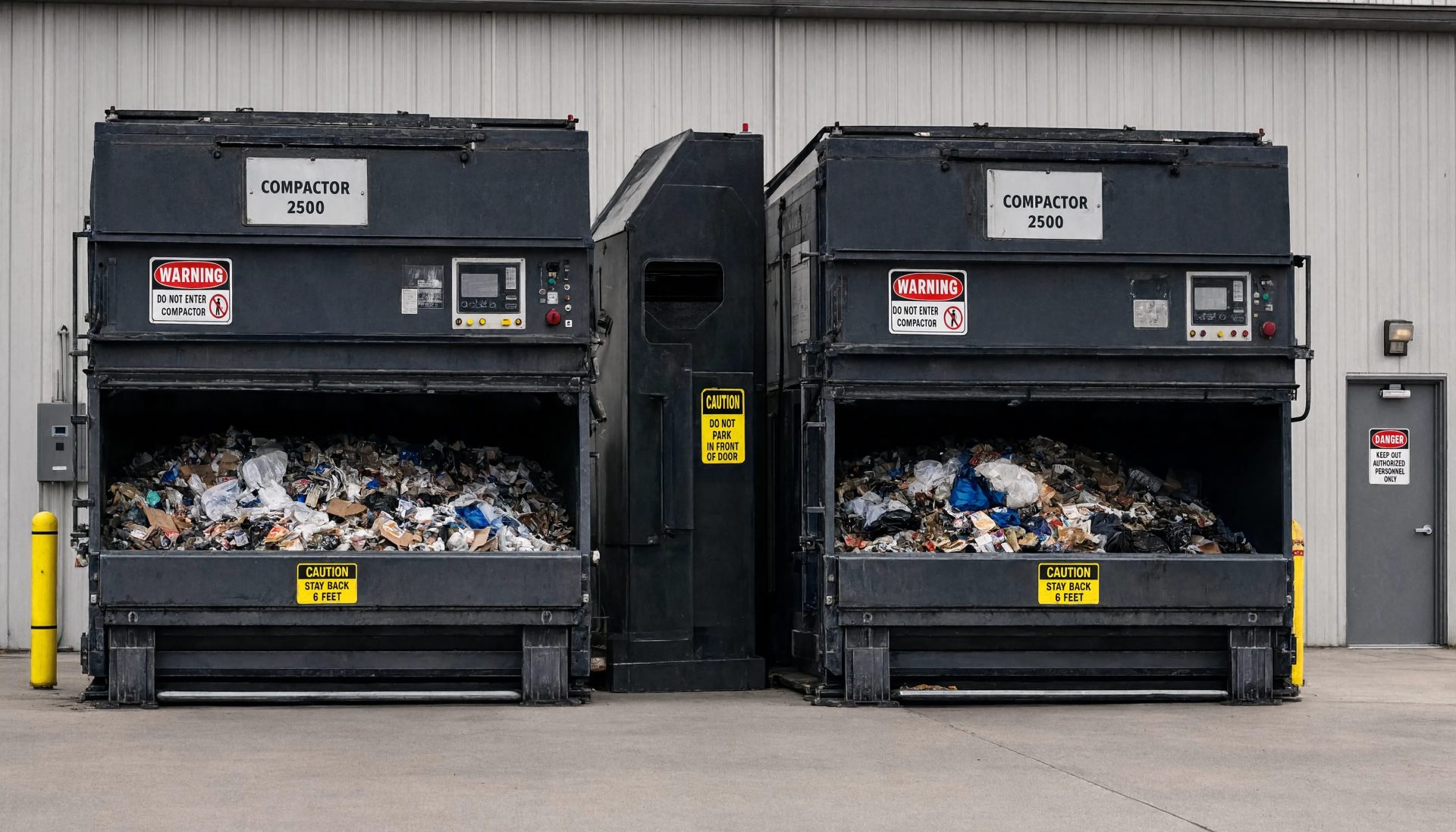
A trash compactor is a piece of equipment that compresses waste before it is hauled away. Instead of loosely filling a container with bags, boxes, packaging, or general refuse, the compactor uses hydraulic pressure to reduce the volume of the material. This allows businesses to fit more waste into the same container footprint.
The simplest way to compare them is this:
- A dumpster stores waste.
- A trash compactor reduces waste volume before storage and hauling.
- A dumpster may cost less upfront.
- A compactor may lower recurring costs when waste volume is high enough.
That distinction matters because most commercial waste expenses are not only about container rental. They are also about hauling frequency, labor, mess, overflow, contamination, safety risks, and space usage.
How Dumpster Costs Add Up
Dumpsters are familiar, simple, and widely available. For some businesses, they are the right choice. A small office, boutique shop, or low-volume facility may not generate enough waste to justify a compactor. In those cases, a dumpster can be a practical and affordable solution.
However, dumpster costs can increase quickly when a business produces more waste than expected. Common dumpster-related costs include:
- Monthly container rental
- Scheduled pickup charges
- Extra pickup fees
- Overflow fees
- Contamination fees
- Fuel or environmental surcharges
- Labor spent breaking down boxes or managing trash
- Costs related to pests, odors, or cleanup
- Space taken up by multiple containers
A business with several loose dumpsters may be paying for air as much as waste. Cardboard boxes, packaging, foam, plastic wrap, and bagged trash can fill a dumpster quickly, even when the actual material weight is relatively low. If the dumpster is full but not dense, the business may pay for another pickup before it has used the full weight capacity of the container.
That is where compaction can create savings.
How Trash Compactors Can Reduce Waste Costs
A trash compactor reduces the volume of waste by compressing materials into a denser load. This can reduce the number of pickups required, which is often the biggest area of savings.
For example, a business that needs dumpster service five times per week may be able to reduce pickups by using a compactor. Fewer hauls can mean lower monthly waste expenses, fewer disruptions, and less time spent managing overflowing containers.
Trash compactors can help reduce costs in several ways:
- Lower pickup frequency: Compacted waste takes up less space, so haulers may need to service the container less often.
- Improved container capacity: Businesses can get more usable capacity from their waste system.
- Reduced overflow charges: Waste is better contained, making overflow less likely.
- Cleaner property conditions: Enclosed compaction equipment can help reduce loose debris, windblown trash, odors, and pest issues.
- Better labor efficiency: Employees may spend less time breaking down materials, moving waste, or cleaning around dumpsters.
- Improved safety: A cleaner waste area can reduce slip, trip, and handling hazards.
- Better space usage: One compactor may replace multiple loose dumpsters in some applications.
For high-volume businesses, these benefits can make a compactor more cost-effective over time than a standard dumpster setup.
Upfront Cost vs. Long-Term Savings
One of the biggest differences in the trash compactor vs. dumpster decision is upfront cost.
A dumpster typically has a lower initial cost. Many businesses rent dumpsters through their waste hauler, so there may be little or no equipment purchase required. This can make dumpsters appealing for businesses with limited budgets or low waste volume.
A trash compactor usually requires a larger upfront investment. Depending on the system, a business may need to purchase or lease equipment, prepare the site, arrange installation, and plan for maintenance. However, that investment can pay off if the compactor significantly reduces hauling costs and improves waste-handling efficiency.
The financial question is not only, “Which option costs less today?” The better question is, “Which option costs less over the life of the waste program?”
Businesses should evaluate:
- Current monthly waste hauling costs
- Number of pickups per week or month
- Overage and extra pickup fees
- Labor hours spent managing waste
- Amount of space used for waste containers
- Waste type and density
- Expected growth in waste volume
- Equipment purchase, lease, installation, and service costs
- Estimated reduction in pickups after compaction
A compactor does not save money in every situation. But when the waste stream is consistent, bulky, and expensive to haul, the long-term savings can be substantial.
When a Dumpster May Be the More Cost-Effective Choice
A dumpster may save more money for businesses that produce low or inconsistent waste volumes. If a company only needs one small dumpster picked up once per week, the cost of adding compaction equipment may not be justified.
A dumpster may be the better fit when:
- Waste volume is low.
- Trash pickups are already infrequent.
- The business has limited space for equipment installation.
- The location is temporary.
- Waste is unusually heavy and not bulky.
- Capital budget is limited.
- The operation does not have recurring overflow or cleanup issues.
For example, a small professional office with minimal trash may not see enough savings from compaction. The monthly savings from fewer pickups may be too small to offset the equipment cost.
In these cases, the most cost-effective approach may be to right-size the dumpster, adjust pickup frequency, improve recycling practices, and monitor waste invoices for unnecessary fees.
When a Trash Compactor May Save More Money
A trash compactor often makes more financial sense for businesses that generate high volumes of bulky waste. This includes businesses that regularly fill dumpsters with packaging, cardboard, retail waste, manufacturing materials, food service waste, or general refuse.
A compactor may be the better fit for:
- Grocery stores
- Retail centers
- Warehouses
- Distribution facilities
- Manufacturers
- Apartment communities
- Hotels
- Hospitals and healthcare facilities
- Schools and universities
- Restaurants with high waste volume
- Shopping centers
- Large office campuses
- Municipal or institutional facilities
Compactors are especially useful when a business has frequent hauls, recurring overflow, or multiple dumpsters on-site. If waste is being hauled before the container reaches its practical weight limit, compaction may help the business get more value from each haul.
The stronger the waste volume and the higher the pickup frequency, the more likely a compactor is to generate meaningful savings.
Waste Type Matters
Not all waste streams are the same. The type of material being disposed of plays a major role in whether a compactor or dumpster is more economical.
Bulky, low-density materials are often good candidates for compaction. Examples include:
- Cardboard
- Packaging materials
- Plastic wrap
- Paper waste
- Retail trash
- Bagged general waste
- Light manufacturing waste
- Pallets or wood scraps, depending on the application and equipment
Wet waste, food waste, and mixed refuse may also be compacted in certain applications, but the equipment must be selected carefully. Some facilities may need self-contained compactors designed to help manage liquids and odors. Others may use stationary compactors for dry waste.
This is why equipment selection should never be treated as one-size-fits-all. Compactors and recycling equipment are application-specific. The right system depends on the material, volume, site layout, hauling arrangement, loading method, and service expectations.
The Role of Recycling Equipment
The cost comparison is not always limited to trash compactors and dumpsters. Businesses may also benefit from recycling equipment such as balers or specialized compaction systems.
For companies with large amounts of cardboard, plastic, or other recyclable materials, separating recyclables can reduce landfill waste and may lower disposal costs. In some cases, baled recyclables may have commodity value, depending on the market and material quality.
Recycling equipment can support cost savings by:
- Diverting material from landfill containers
- Reducing trash hauling frequency
- Improving material handling
- Creating cleaner recycling streams
- Supporting sustainability goals
- Reducing clutter in storage and receiving areas
For example, a retailer that fills dumpsters with cardboard may be paying to dispose of material that could be baled and recycled. A proper recycling equipment setup can reduce waste costs while improving back-of-house organization.
Space and Site Cleanliness
Waste equipment also affects how a property looks and functions. Dumpsters can take up valuable outdoor space, especially when several containers are needed. They can also create problems if they overflow or attract pests.
A compactor can improve site organization by consolidating waste into a controlled system. Enclosed or properly installed equipment can help keep trash contained and reduce the need for constant cleanup.
This can matter for:
- Customer-facing businesses
- Retail centers
- Restaurants
- Hotels
- Multifamily properties
- Industrial facilities with traffic flow concerns
- Sites with limited loading dock space
Cleaner waste areas may also reduce complaints from customers, tenants, neighbors, and employees. While these benefits may not always appear as a simple line item on a waste invoice, they can affect operating efficiency and overall property management costs.
Labor Costs and Operational Efficiency
Waste handling often takes more employee time than managers realize. Staff may spend time breaking down boxes, carrying trash to dumpsters, cleaning around containers, calling for extra pickups, or dealing with blocked waste areas.
A compactor can reduce some of this labor by making waste disposal more efficient. Depending on the setup, employees may be able to load waste directly into the compactor instead of repeatedly managing loose containers.
Potential labor-related benefits include:
- Less time breaking down bulky materials
- Fewer trips to multiple dumpsters
- Reduced cleanup around waste areas
- Fewer calls for emergency pickups
- Better workflow near docks or receiving areas
- Improved control over waste disposal procedures
For businesses where labor is already tight, these efficiency gains can be valuable. Even if the waste invoice savings are moderate, reduced employee time and cleaner operations can strengthen the overall return on investment.
Maintenance and Service Considerations
A dumpster is relatively simple. It does not have moving parts, hydraulics, electrical systems, or controls. A compactor is more advanced equipment, so service and maintenance must be considered.
That does not mean compactors are impractical. It means businesses should work with an experienced provider that can build, install, maintain, and service the right equipment for the application.
When evaluating compactor costs, businesses should ask:
- What type of compactor is best for this waste stream?
- What maintenance will be required?
- Who provides service and repairs?
- How quickly can service be performed?
- Are mobile service and repair options available?
- What happens if the equipment goes down?
- Is training provided for safe operation?
Ongoing support is important because a compactor is part of daily operations. Reliable service helps protect the investment and keeps the waste system working as intended.
How to Calculate Potential Savings
Businesses do not have to guess whether a trash compactor or dumpster will save more money. A practical cost review can help determine the better option.
Start by gathering:
- Current waste invoices from the past 6 to 12 months
- Pickup frequency
- Container sizes
- Extra pickup charges
- Overflow or contamination fees
- Waste type and approximate volume
- Number of dumpsters on-site
- Labor time spent managing waste
- Space limitations or site concerns
- Recycling volumes, especially cardboard or plastic
Then compare the current dumpster program against a properly designed compactor or recycling equipment solution. The goal is to estimate how many pickups could be reduced and what operational improvements could be gained.
A simple evaluation may include:
- Current monthly waste cost
- Projected monthly cost after compaction
- Estimated equipment cost
- Installation costs
- Maintenance and service expectations
- Estimated monthly savings
- Payback period
- Long-term savings over several years
The payback period is especially useful. If a compactor pays for itself through reduced hauling and labor savings within a reasonable timeframe, it may be the stronger financial choice.
Common Mistakes Businesses Make When Comparing Options
Businesses sometimes choose waste equipment based only on the lowest upfront cost. That can lead to higher long-term expenses.
Common mistakes include:
- Choosing a dumpster because it is familiar, without reviewing the hauling frequency
- Ignoring overflow and extra pickup fees
- Using multiple dumpsters when one compactor could improve efficiency
- Installing equipment that does not match the waste stream
- Overlooking recycling opportunities
- Forgetting to include labor and cleanup costs
- Failing to plan for service and repairs
- Assuming every compactor works the same way
The best waste solution is not always the cheapest option on day one. It is the option that best matches the business’s material volume, operations, site layout, and financial goals.
Trash Compactor vs. Dumpster: Which Saves More Money?
For low-volume businesses, a dumpster may save more money because it has a lower upfront cost and simpler service requirements.
For medium- to high-volume businesses, a trash compactor may save more money because it can reduce hauling frequency, improve waste density, reduce overflow, and create cleaner, more efficient operations.
The answer depends on the application. Businesses should not choose a compactor or dumpster based on assumptions. They should evaluate the full waste stream, current costs, site conditions, recycling opportunities, and service needs.
In many cases, the best solution may include a combination of equipment. A business might use a compactor for general waste, a baler for cardboard, and a smaller dumpster for specific materials. The right design can reduce waste costs while improving the way the facility operates.
FAQ
Is a trash compactor always cheaper than a dumpster?
No. A trash compactor is not always cheaper. It usually makes the most financial sense when a business has enough waste volume to reduce pickup frequency and offset equipment costs.
What type of business benefits most from a trash compactor?
Businesses with high-volume or bulky waste often benefit most. This includes retailers, warehouses, grocery stores, manufacturers, hotels, apartment communities, and distribution centers.
When is a dumpster the better choice?
A dumpster may be better for small businesses with low waste volume, infrequent pickups, temporary locations, or limited space for installed equipment.
Can a compactor reduce hauling costs?
Yes. A compactor can reduce hauling costs by compressing waste so more material fits into each load, which may reduce the number of pickups needed.
Does waste type affect the decision?
Yes. Bulky materials like cardboard, packaging, paper, and light general waste are often strong candidates for compaction. Wet waste or specialized materials may require specific equipment.
Can recycling equipment save money, too?
Yes. Recycling equipment can help divert cardboard, plastic, and other recyclable materials from landfill waste, which may reduce disposal costs and improve material handling.
Do trash compactors require maintenance?
Yes. Trash compactors have mechanical, hydraulic, and electrical components that require proper service. Reliable maintenance and repair support are important for long-term performance.
How can a business know which option is right?
The best approach is to review current waste costs, pickup frequency, waste volume, material type, site layout, and recycling opportunities with an experienced equipment provider.
Put Your Waste Program into ACTION
Choosing between a trash compactor and a dumpster is ultimately a business decision. The right choice depends on your waste stream, operating costs, available space, and long-term goals. Because compactors and recycling equipment are application-specific, it is important to work with a company that understands how to build, install, service, and support equipment for real-world business environments.
Action Compaction takes pride in building and installing great equipment while providing excellent ongoing service and support. The Action Compaction Service Department is on call for mobile service and repairs, helping businesses keep their waste and recycling systems operating properly.
Action Compaction serves the Intermountain West, Utah, and the surrounding states, and sells nationwide.
Ready to get started? Call us today and put them into ACTION.
Recent Comments