The right trash compactor size depends on your waste volume, material type, available space, pickup schedule, and operational workflow. There is no universal size that fits every business. A compactor that works for a grocery store will not necessarily suit a warehouse, hospital, apartment community, or manufacturing facility. Start by assessing how much waste you generate, what type it is, and how often it needs to be hauled.
Key takeaways:
- Waste volume and material type are the two most critical sizing factors.
- Self-contained compactors are best for wet waste; stationary units suit dry, high-volume applications.
- Site layout, pickup frequency, and loading method all influence which size is practical.
- Oversizing creates inefficiency; undersizing causes overflow and extra hauling costs.
- A professional site assessment is the most reliable path to the correct equipment choice.
Why Trash Compactor Size Matters
Choosing the wrong size creates ongoing operational problems. Too small, and you face frequent overflow, extra pickups, and staff struggling to manage waste between service intervals. Too large, and waste sits longer than it should, increasing odor and sanitation risks while consuming space and capital you did not need to spend.
A properly sized compactor should:
- Handle daily or weekly waste volume without frequent overflow
- Match the type and density of material your operation produces
- Fit safely within your available installation footprint
- Support your hauler’s pickup schedule and truck access requirements
- Align with your loading method and employee workflow
- Deliver long-term value through durability and serviceability
Start With Your Waste Volume
Waste volume is how much trash your facility produces over a given period, typically measured daily or weekly. It is the foundation of any compactor sizing decision. A business filling several large dumpsters each week has very different needs than a small retail location producing one or two bags per shift.
To estimate your waste volume accurately, consider:
- How many containers you currently use and their capacity
- How often each container is collected
- Whether containers are typically full, partial, or overflowing at pickup
- Whether volume fluctuates by season, shift, or business cycle
- Whether planned growth will increase output in the near future
A retail location may produce heavy cardboard volume during delivery days. A restaurant generates wet food waste daily. A warehouse may fill containers with bulky but lightweight packaging. Each scenario calls for a different approach to sizing and equipment selection.
Waste Type Is Just as Important as Volume
Two businesses producing identical volumes of waste may require completely different compactor configurations if the materials are different. Dry waste, wet waste, bulky materials, and recyclables all compact differently and place different demands on equipment.
Common commercial waste categories and their implications:
- Dry waste: Packaging, paper, plastic wrap, and general commercial refuse. Typically suited to stationary compactors.
- Wet waste: Food scraps, produce, and liquid-bearing materials. Requires a self-contained unit with liquid containment.
- Bulky waste: Large packaging, foam, pallets, and crates. May need a higher-force unit or pre-processing.
- Recyclables: Cardboard, plastics, and metals may be better handled by a dedicated baler rather than a trash compactor.
- Industrial waste: Dense manufacturing byproducts or production scrap often require heavier-duty equipment and a load analysis.
Stationary vs. Self-Contained Compactors
Understanding the difference between stationary and self-contained compactors is essential before evaluating size options. These two designs serve different waste streams and site conditions.
Stationary Compactors
A stationary compactor remains fixed on-site and pushes waste into a separate, detachable receiver container. When the container is full, the hauler swaps it out while the compactor unit stays in place. These systems are typically used for dry waste and high-volume commercial or industrial operations.
Stationary compactors are commonly a strong fit for:
- Warehouses and distribution centers
- Retail stores and shopping centers
- Manufacturing facilities
- Large commercial properties with mostly dry waste
- Businesses generating high volumes of bulky packaging
Browse available new industrial compactors to compare stationary configurations and container sizes.
Self-Contained Compactors
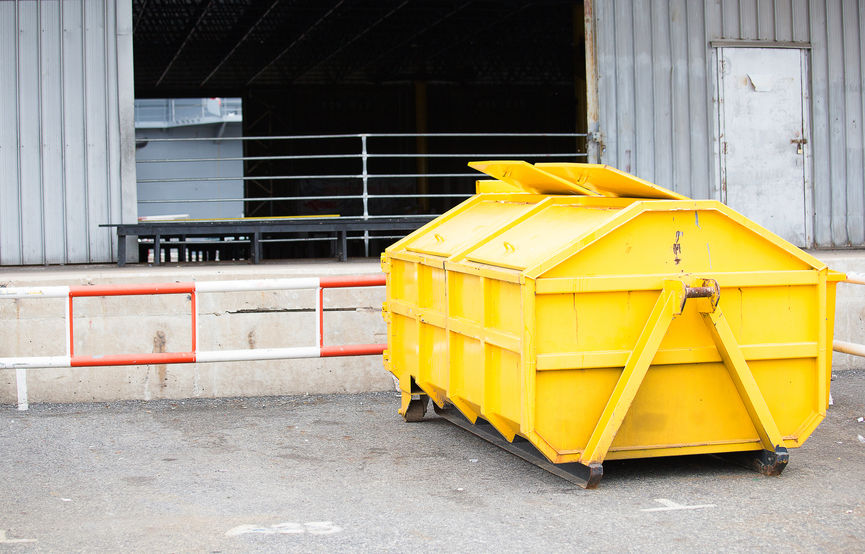
A self-contained compactor combines the compactor and collection container into a single sealed unit. The entire assembly is hauled away when full and returned after emptying. This design contains liquids more effectively, making it the preferred choice for wet or odor-producing waste streams.
Self-contained compactors work well for:
- Restaurants, hotels, and food service operations
- Grocery stores and food processing facilities
- Hospitals and healthcare campuses
- Apartment communities and multifamily properties
- Any site with leakage, odor, or sanitation concerns
Key Sizing Elements to Evaluate
When reviewing compactor specifications, size involves more than container capacity. Each of these elements affects how well the system performs in your specific operation:
- Container capacity: How much compacted waste the receiver holds before requiring pickup
- Charge box size: The volume of loose material that can be loaded per compaction cycle
- Compaction ratio: How much the unit reduces waste volume, which varies by material type
- Motor and hydraulic power: The system’s ability to handle heavy, dense, or difficult materials
- Physical footprint: The space required for the unit, loading access, maintenance, and hauler clearance
Matching all five elements to your actual operating conditions is what produces a well-functioning installation. Focusing on container capacity alone often leads to poor sizing decisions.
How Pickup Frequency Affects Sizing
Your current hauling schedule is a useful diagnostic tool. If containers are being emptied multiple times per week and are consistently full or overflowing, a compactor sized to reduce that frequency can lower hauling costs and improve site cleanliness. If pickups are happening but containers are only partially full, you may be paying for service you do not need.
Questions to evaluate your current situation:
- How often is waste currently collected?
- Are containers full at the time of pickup?
- Do you experience overflow before the scheduled service date?
- Are you paying for pickups on containers that are not full?
- Would reducing pickup frequency lower operating costs meaningfully?
A properly sized compactor should match a practical pickup interval without generating overflow or sanitation problems in between service dates.
Site Layout and Space Requirements
Even the right-sized compactor creates problems if the installation area cannot support it. The location must accommodate the equipment itself, employee loading access, maintenance clearance, drainage needs, and truck approach for pickup.
Important site planning factors include:
- Available pad size and surface condition
- Truck approach angle and turning radius
- Gate, door, and dock access dimensions
- Height clearance for loading and hauling
- Slope, drainage, and liquid containment requirements
- Electrical service proximity
- Safety zones around loading and operation areas
Tight loading docks, urban alleys, enclosed waste rooms, and properties with limited truck access all require a formal site evaluation before equipment is selected. A unit that fits your waste volume but cannot be serviced easily will create ongoing operational problems. If your current setup is showing those signs, reviewing both new equipment and used equipment options can help identify what configurations are realistically available for your footprint.
Loading Method and Employee Workflow
How employees physically load waste into the compactor affects both sizing and equipment configuration. A system that requires staff to carry heavy bags across long distances, lift above shoulder height, or wait frequently for compaction cycles to complete will create safety risks and slow down back-of-house operations.
Common loading methods and typical applications:
- Ground-level loading: Standard configuration for most commercial sites
- Dock loading: Common in warehouses and distribution centers
- Chute-fed loading: Suitable for multi-story residential or hospitality properties
- Cart dumping: Used in food service, hospitality, and healthcare settings
- Conveyor or through-the-wall loading: Used in high-volume production or processing environments
The correct loading setup reduces manual labor, improves safety, and keeps waste moving efficiently during busy operational periods.
Waste Density and Compaction Ratio
Two facilities with the same loose waste volume may compact very differently depending on material density. Lightweight materials like cardboard and plastic film compress significantly. Dense materials, wet food waste, and mixed commercial refuse compact less efficiently and may require a larger or more powerful unit to achieve the same effective capacity.
Practical examples:
- Cardboard compacts well but is often better managed with a dedicated baler in high-volume applications
- Food waste is heavy, wet, and may require liquid containment features
- Plastic packaging is bulky but lightweight, and compaction ratios can vary widely
- Industrial scrap may require a higher-force unit and a formal load analysis before sizing
A professional assessment can estimate realistic compaction performance for your material stream rather than relying on generic ratios that may not reflect your actual waste composition.
Planning for Growth and Seasonal Changes
Sizing for current volume alone can leave you undersized within a year or two. Many operations experience predictable peaks and long-term growth that affect waste generation meaningfully.
Consider the following before finalizing equipment selection:
- Peak season volume compared to baseline
- Planned business expansion or new tenants
- Changes in packaging or supply chain volume
- New product lines or service expansions
- Evolving recycling or diversion goals
The best sizing approach accounts for realistic growth projections without significantly oversizing for worst-case scenarios. Build in reasonable headroom, not maximum theoretical capacity.
When Recycling Equipment Makes More Sense
A trash compactor is not always the right primary solution. If your waste stream includes large amounts of cardboard, plastic film, metals, or other recoverable materials, industrial recycling balers may reduce volume more efficiently and recover material value that a compactor would send to landfill.
Recycling equipment may be worth prioritizing when:
- Cardboard makes up a significant portion of your daily waste
- You have separate, clean recyclable material streams
- Corporate sustainability goals include landfill diversion targets
- Baled material revenue could offset equipment costs
- Local regulations require separation of certain recyclable materials
In many facilities, a compactor and a baler work together. The compactor handles general refuse while the baler processes clean recyclables separately. Operations managing both streams should also explore available sorting systems that help pre-separate materials before either process.
Warning Signs Your Current Setup Is Wrong
If your existing waste equipment is causing recurring problems, the issue is often a mismatch between the equipment and the application, not simply a maintenance backlog.
Common warning signs include:
- Frequent container overflow between pickups
- Trash accumulating around the compactor or in adjacent areas
- Pickups happening too often or too infrequently for the waste volume
- Persistent odor or leakage around the equipment area
- Employees struggling with loading, jamming, or cycle management
- Rising hauling costs without an increase in waste output
- Repeated equipment jams or mechanical failures
- Inadequate capacity during peak production or service periods
These symptoms may point to undersized equipment, the wrong compactor type for your waste stream, poor site placement, or deferred maintenance. In some cases, a larger unit is the answer. In others, switching between a stationary and self-contained design, adding a baler, or adjusting the hauling schedule resolves the problem more effectively.
Why Professional Sizing Matters
Because compactors and recycling equipment are application-specific, a professional site evaluation produces far better outcomes than selecting based on general specifications alone. An experienced provider can assess waste volume and material type, review site constraints, evaluate electrical and drainage requirements, confirm hauler compatibility, and identify service and maintenance needs before installation.
Professional sizing helps avoid:
- Purchasing a unit that is too small for actual demand
- Paying for capacity that will never be used
- Installing equipment that does not fit the available space
- Choosing the wrong compactor design for a wet or dry waste stream
- Creating access problems for employees or hauling trucks
- Missing recycling opportunities that could reduce disposal costs
Bottom Line
The right trash compactor size is determined by waste volume, material type, site layout, pickup schedule, and loading method working together. Start with an honest assessment of your current waste stream, identify whether dry or wet waste dominates, evaluate your space constraints, and match the equipment to the operation rather than defaulting to the largest available unit. When in doubt, a professional site assessment delivers more accurate guidance than any general sizing rule.
Frequently Asked Questions
What size trash compactor do most businesses need?
There is no universal answer. The right size depends on daily and weekly waste volume, material type, site layout, pickup schedule, and loading method. A warehouse generating dry packaging waste has very different needs than a restaurant producing wet food waste. A site-specific assessment is the most reliable way to determine the correct equipment.
Is a bigger trash compactor always better?
No. An oversized compactor takes up unnecessary space, costs more than needed, and can allow waste to sit too long before pickup, creating odor and sanitation issues. The best size balances capacity, sanitation requirements, hauling frequency, and available space for your specific operation.
What is the difference between a stationary and self-contained compactor?
A stationary compactor remains fixed on-site and compacts waste into a separate, removable container. It is primarily used for dry waste. A self-contained compactor combines the compactor and container into one sealed unit that is hauled away when full. It is designed for wet waste and applications where liquid containment and odor control are priorities.
How do I know if I need a compactor or recycling equipment?
If your waste is primarily general refuse, a compactor is usually appropriate. If large volumes of cardboard, plastic, or other recyclable materials make up your waste stream, a baler or recycling compactor may offer better volume reduction, material recovery, and potential cost savings compared to sending those materials through a general trash compactor.
Can a trash compactor reduce my hauling costs?
In many cases, yes. Compaction reduces waste volume, which can lower pickup frequency and associated hauling fees. Actual savings depend on your current waste volume, compaction performance for your specific material type, hauler pricing structure, and how well the equipment is matched to your output.
What information should I have ready before requesting a quote?
Gather your current container sizes, pickup frequency, waste type, estimated daily or weekly volume, available installation space, loading method, and any recurring issues such as overflow, odor, or access problems. Site photos are also helpful. The more accurately you can describe your current situation, the more precise the equipment recommendation will be.
Do trash compactors require ongoing maintenance?
Yes. Compactors include hydraulic, electrical, and mechanical systems that require regular service to operate safely and reliably. Scheduled preventive maintenance extends equipment life, reduces downtime risk, and helps identify wear before it becomes a breakdown. Confirm that your provider offers mobile service and repair support before purchase.
Get the Right Compactor for Your Application
Choosing the right trash compactor size starts with understanding your waste stream, site conditions, and operational goals. Action Compaction builds and installs equipment across the Intermountain West, Utah, and surrounding states, and sells nationwide. Our Service Department provides mobile service and repairs to keep systems running when they matter most. Call us today to get started.