Retail waste management solutions play a critical role in helping stores, shopping centers, warehouses, distribution facilities, and other retail operations handle waste more efficiently, reduce hauling costs, improve cleanliness, and support recycling goals. In a retail environment, waste can accumulate quickly. Cardboard packaging, plastic film, mixed trash, pallets, product packaging, and other materials can take up valuable space, create safety concerns, and increase labor demands if they are not managed with the right equipment and process.
Two of the most common types of equipment used in retail waste management are balers and compactors. Both are designed to reduce the volume of waste or recyclable material, but they serve different purposes. A baler is typically used to compress recyclable materials, such as cardboard or plastic, into dense, stackable bales. A compactor is generally used to compress waste into a container for more efficient storage and hauling. The right choice depends on the type of material being handled, available space, hauling arrangements, labor resources, recycling goals, and the overall waste stream of the business.
Because compactors and recycling equipment are application-specific, retailers benefit from understanding how each system works and when one may be more appropriate than the other. In many cases, a retail operation may even need both.
Why Retail Waste Management Matters
Retailers generate a wide variety of waste and recyclable materials every day. A grocery store may handle cardboard boxes, shrink wrap, spoiled products, packaging waste, and general refuse. A department store may produce large volumes of corrugated cardboard from incoming shipments. A shopping center may need a shared solution for multiple tenants. A distribution facility may require high-capacity equipment to manage a continuous flow of packaging materials and trash.
Without a practical waste management system, these materials can create several operational challenges:
- Overflowing dumpsters and frequent waste pickups
- Cluttered stockrooms, loading docks, and back-of-house areas
- Increased labor time spent breaking down boxes or moving waste
- Higher hauling costs due to inefficient container use
- Safety risks from loose debris, blocked walkways, or heavy manual handling
- Missed recycling opportunities
- Poor curb appeal or unsanitary waste areas
The goal of an effective system is not only to get rid of waste. It is to create a cleaner, safer, more organized, and more cost-effective operation.
What Is a Baler?
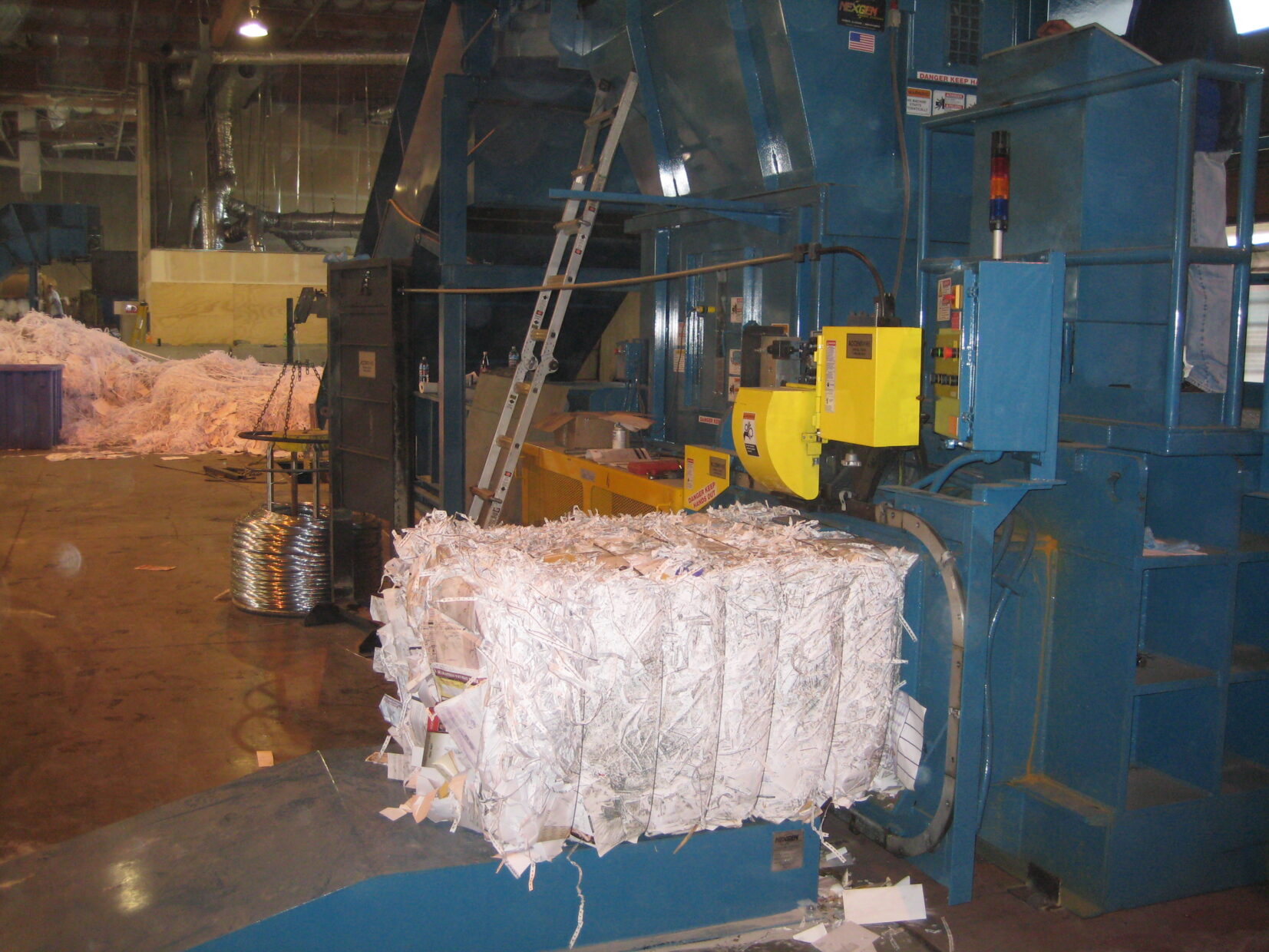
A baler is a piece of recycling equipment that compresses loose recyclable material into a dense bale. In retail settings, balers are most often used for corrugated cardboard, but they may also be used for plastic film, paper, textiles, cans, and other recyclable materials, depending on the equipment and application.
The process is straightforward. Employees place recyclable material into the baler chamber. The machine compresses the material using hydraulic pressure. Once the bale reaches the appropriate size and density, it is tied off with wire, twine, or strapping, then removed for storage, pickup, or sale to a recycler.
Balers are commonly used in:
- Grocery stores
- Big-box retailers
- Department stores
- Warehouses
- Distribution centers
- Manufacturing facilities
- Recycling centers
- Shopping centers with high cardboard volume
Common Types of Balers
Retailers may choose from several baler designs depending on material volume, available space, and labor needs.
Vertical Balers
Vertical balers are among the most common choices for retail operations. They have a relatively small footprint and are well-suited for businesses that generate moderate amounts of cardboard or recyclable material. Material is loaded from the front, compressed vertically, and tied into bales.
Vertical balers are often a good fit for individual stores, small warehouses, and retailers that need a cost-effective recycling solution without dedicating extensive floor space.
Horizontal Balers
Horizontal balers are generally used in higher-volume applications. They compress material horizontally and can be configured for manual, semi-automatic, or automatic operation. These systems are often used in distribution centers, large retail warehouses, recycling facilities, and operations that produce large amounts of cardboard or plastic.
Horizontal balers typically require more space and a higher investment, but they can significantly improve efficiency for high-volume material handling.
Closed-Door Balers
Closed-door balers are designed to produce dense, consistent bales. They are often used for recyclable materials that require higher compression. These balers can be useful in operations where bale quality, storage efficiency, and recycling value are priorities.
Two-Ram Balers
Two-ram balers are heavy-duty systems designed for high-volume and multi-material recycling operations. They are often used in large facilities that process several types of recyclable materials and need flexibility, automation, and consistent bale production.
What Is a Compactor?
A compactor is waste handling equipment that compresses trash or other waste materials into a container. The primary goal is to reduce the volume of loose waste so the container can hold more material before it needs to be hauled away. This can reduce pickup frequency, improve sanitation, control odors, and keep waste areas more organized.
Compactors are widely used in retail environments because they help manage general trash efficiently. While balers are generally associated with recycling, compactors are typically associated with refuse, although some compactors may also be used for recyclable materials depending on the application.
Compactors are commonly used in:
- Grocery stores
- Shopping centers
- Retail plazas
- Big-box stores
- Hotels
- Restaurants
- Warehouses
- Distribution facilities
- Apartment and mixed-use properties
Common Types of Compactors
Different compactor styles are designed for different waste streams, space constraints, and hauling requirements.
Self-Contained Compactors
Self-contained compactors are often used for wet waste or waste that may contain liquids, food residue, or organic material. The compactor and container are built as one sealed unit, which helps reduce leakage and improve sanitation. These systems are common in grocery stores, restaurants, food retailers, and other locations that handle waste with moisture content.
Stationary Compactors
Stationary compactors are generally used for dry waste. The compactor unit remains in place while the container is detached and hauled away. These compactors are often used for cardboard, packaging waste, and general dry refuse in retail and industrial environments.
Vertical Compactors
Vertical compactors are useful when space is limited. They compress waste downward into a container and may be installed in tight areas where a traditional horizontal unit is not practical. These compactors can be a good fit for smaller retail locations, urban sites, and facilities with restricted loading dock space.
Pre-Crushers
Pre-crusher compactors are designed for bulky materials. They crush items before compacting them into the container, which can help reduce void space and prevent large materials from springing back after compression. Retailers or warehouses that handle pallets, crates, furniture, or bulky packaging may benefit from this type of system.
Balers vs. Compactors: Key Differences
Balers and compactors both reduce material volume, but they are not interchangeable. Understanding the differences is essential when selecting equipment.
Material Type
Balers are generally used for recyclable materials, especially cardboard and plastic film. Compactors are generally used for trash, mixed waste, wet waste, or dry refuse.
A baler is often the better choice when the material has recycling value. A compactor is usually the better choice when the material is being sent to a landfill or transfer station.
End Product
A baler produces a bale. Bales can be stacked, stored, transported, and sold or sent to a recycler. A compactor produces compacted waste inside a container, which is then hauled away by a waste hauler.
Operational Goal
Balers support recycling, material separation, and potential recycling revenue. Compactors support waste volume reduction, improved hauling efficiency, and better waste containment.
Space Requirements
Vertical balers may require less space than many compactor systems, though bale storage must be considered. Compactors require space for the unit, container, hauling access, and safe loading procedures. The right layout depends on the facility’s loading dock, waste area, power availability, and traffic flow.
Labor Requirements
Balers often require employees to separate materials, load the chamber, tie bales, and move finished bales. Compactors typically require employees to load waste, but the hauling process is handled through the container service arrangement. Automation, loading style, and equipment size can influence labor demands for both systems.
Hauling and Service
Balers usually involve coordination with recyclers or material buyers. Compactors involve coordination with waste haulers for container pickup and return. Both require routine maintenance and professional service to operate reliably.
When a Retailer Should Choose a Baler
A baler may be the right option when a retailer generates a consistent stream of clean recyclable material. For many retailers, cardboard is the main reason to invest in a baler. Incoming shipments often arrive in corrugated boxes, and those boxes can quickly fill dumpsters if they are not compressed.
A baler may be especially useful when:
- The business generates large amounts of cardboard
- Recyclable materials are clean and separated
- Dumpster pickups are frequent because of bulky packaging
- The retailer wants to improve recycling participation
- There is space to store finished bales
- Employees can be trained to safely operate the equipment
- The business wants to reduce loose material in storage areas or loading docks
Balers can also help retailers make better use of limited space. Loose cardboard is bulky and inefficient to store. Once it is baled, the same material becomes easier to move, stack, and stage for pickup.
When a Retailer Should Choose a Compactor
A compactor may be the right option when a retailer needs to manage general trash, mixed waste, wet waste, or high volumes of refuse. Compactors are particularly valuable when loose waste fills containers quickly or creates sanitation and appearance issues.
A compactor may be especially useful when:
- Waste dumpsters overflow between pickups
- The business pays for frequent hauling
- Waste areas attract pests, odors, or windblown debris
- The site produces wet waste or food-related waste
- Employees spend too much time managing loose trash
- The property needs a cleaner and more contained waste area
- The facility has enough space and access for compactor hauling
For many retail properties, a compactor can improve both efficiency and appearance. A cleaner waste area is especially important for stores that share space with customers, tenants, vendors, and delivery personnel.
When Retailers May Need Both
In many retail environments, the best solution is not a baler versus a compactor. It is a baler and compactor. A grocery store, for example, may use a baler for cardboard and plastic film while using a self-contained compactor for wet waste and general refuse. A shopping center may use a compactor for shared trash, while individual tenants use smaller recycling equipment for cardboard.
Using both systems can help separate recyclable materials from trash, reduce contamination, and improve overall waste handling. The result is often a more organized operation with better control over hauling, storage, labor, and recycling performance.
A combined system may make sense when:
- The facility has both high recyclable volume and high trash volume
- Cardboard is taking up space in trash containers
- Waste hauling costs are rising
- Recycling goals are part of the company’s sustainability plan
- The business wants cleaner loading docks and waste areas
- Multiple departments or tenants generate different waste streams
Factors to Consider Before Selecting Equipment
Because waste and recycling equipment is application-specific, retailers should evaluate their operation carefully before choosing a system. The wrong equipment can create workflow issues, safety concerns, or unnecessary costs. The right equipment can improve daily operations and support long-term efficiency.
Important factors include:
- Type of material being handled
- Daily or weekly waste volume
- Moisture content of the waste
- Available floor space
- Ceiling height and dock layout
- Power requirements
- Employee access and workflow
- Hauler requirements
- Recycler requirements
- Local codes and site restrictions
- Desired level of automation
- Maintenance and service availability
- Long-term growth or volume changes
Retailers should also consider who will use the equipment, how often it will be loaded, where material will be staged, and how service technicians or haulers will access the unit. A good system should fit the operation, not force the operation to work around the equipment.
The Importance of Service and Support
Selecting the right baler or compactor is only part of the equation. Ongoing service and support are essential for safe, dependable performance. Retail waste equipment works hard, often in demanding environments. Hydraulic systems, electrical components, doors, controls, cylinders, and safety features all need proper attention.
Reliable service can help retailers:
- Reduce downtime
- Extend equipment life
- Improve safety
- Maintain productivity
- Avoid unexpected disruptions
- Keep waste areas operating smoothly
- Address repairs quickly when problems occur
For retailers that depend on their equipment every day, access to knowledgeable mobile service and repair support can make a major difference.
FAQ
What is the main difference between a baler and a compactor?
A baler compresses recyclable materials, such as cardboard or plastic, into dense bales. A compactor compresses trash or waste into a container for more efficient hauling.
Is a baler better than a compactor for cardboard?
In many cases, yes. If the cardboard is clean and recyclable, a baler is usually the better choice because it creates manageable bales that can be picked up or sold for recycling.
Can a compactor be used for recycling?
Some compactors can be used for recyclable materials, depending on the application. However, balers are usually preferred when the goal is to create recyclable bales with consistent density and handling value.
What type of compactor is best for wet waste?
A self-contained compactor is commonly used for wet waste because it is designed to help contain liquids and reduce leakage.
Does every retail store need a baler?
No. A baler is most useful for stores that generate enough recyclable material to justify the equipment, space, and labor. Smaller stores with limited cardboard volume may use other recycling methods.
Does every retail store need a compactor?
No. A compactor is most useful when waste volume, pickup frequency, sanitation, or space constraints make loose waste handling inefficient.
Can a retailer use both a baler and a compactor?
Yes. Many retail operations use both. A baler can manage cardboard and recyclables, while a compactor handles general trash or wet waste.
How do I know which equipment is right for my business?
The best choice depends on your waste stream, volume, site layout, hauling needs, recycling goals, and available space. A professional equipment provider can evaluate the application and recommend the right solution.
Call Action Compaction Today
Choosing between a baler and a compactor is not a one-size-fits-all decision. Compactors and recycling equipment are application-specific, and the right system should be matched to your materials, space, workflow, hauling requirements, and long-term operational goals.
We take pride in building and installing great equipment while providing excellent ongoing service and support. Our Service Department is on call for Mobile Service and Repairs, helping customers keep their equipment running when they need it most. Our Service Area includes the Intermountain West, Utah, and the Surrounding States, and we sell nationwide.
Ready to get started? Call us today and put us into ACTION!
Recent Comments