Retailers handle a steady flow of packaging, shipping materials, and recyclable waste every day, which is why investing in a cardboard baler for retail can be a practical way to reduce waste costs, improve backroom organization, and support more efficient recycling operations. From grocery stores and big-box retailers to shopping centers, warehouses, and distribution-based retail businesses, cardboard and packaging waste can quickly become expensive when it is unmanaged. A baler helps turn loose, bulky recyclable material into compact, stackable bales that are easier to store, transport, and recycle.
Waste management is often treated as a routine operating expense, but for retailers, it can become a significant cost center. Frequent hauling, overflowing dumpsters, labor-intensive cleanup, limited storage space, and poor recycling practices all contribute to higher expenses. Balers give retailers a way to take control of that process by reducing waste volume, improving material handling, and creating cleaner, safer work areas.
Why Waste Costs Add Up Quickly in Retail
Retailers generate large volumes of waste because products arrive in layers of packaging. Cardboard boxes, corrugated packaging, shrink wrap, paper, and other recyclable materials can pile up throughout the day. Without the right equipment, employees may spend unnecessary time breaking down boxes, moving loose materials, or making repeated trips to dumpsters.
Common waste cost drivers in retail include:
- Frequent waste hauling or dumpster pickups
- Overfilled outdoor containers
- Labor spent manually handling loose cardboard
- Limited storage space in receiving areas and backrooms
- Missed opportunities to separate recyclable materials
- Safety hazards caused by cluttered workspaces
- Inefficient recycling processes
Loose cardboard takes up a large amount of space. Even when boxes are flattened by hand, they can still consume valuable backroom, dock, or dumpster capacity. When waste containers fill too quickly, retailers may need more frequent pickups. Those pickups can raise costs and make waste management harder to control.
How Balers Help Reduce Waste Volume
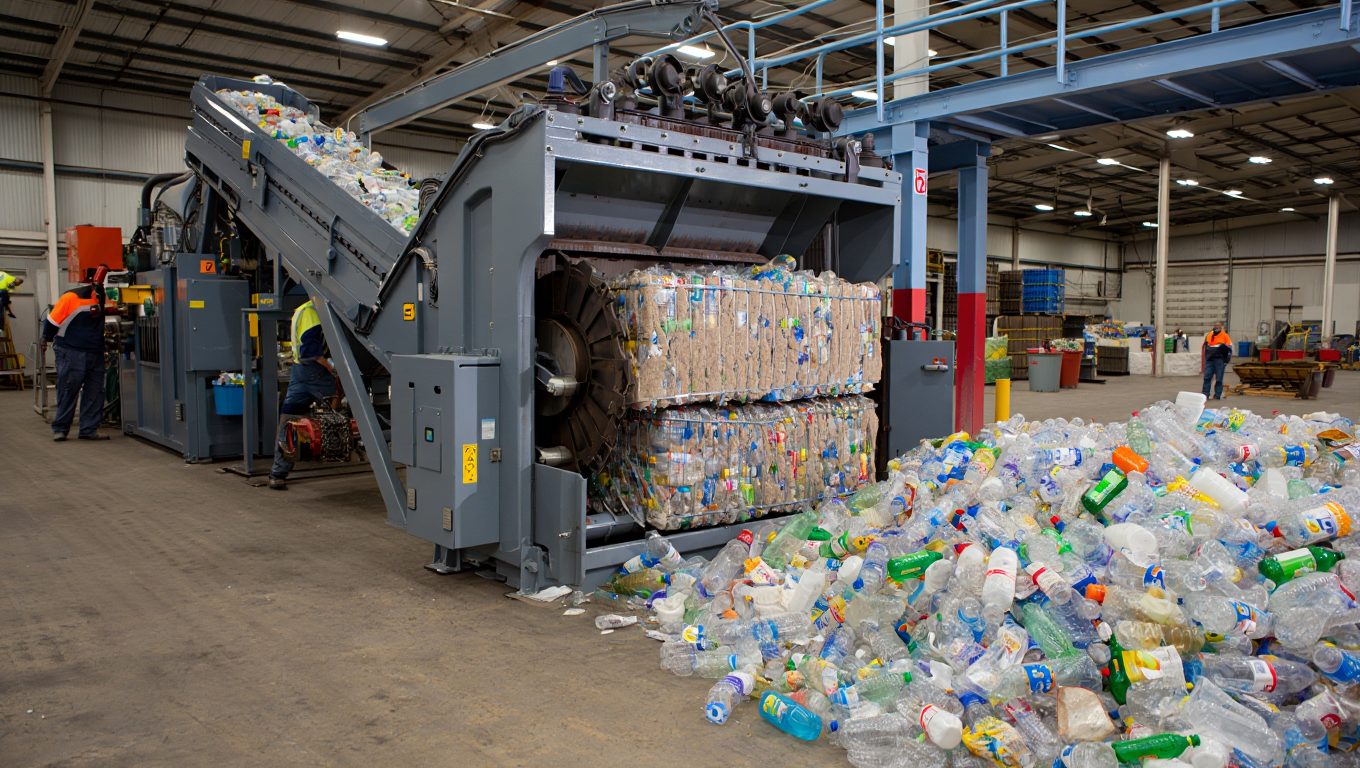
A baler compresses recyclable materials into dense, manageable bales. For retailers, cardboard is often the primary material being baled, although some equipment can also handle plastic, paper, and other recyclables, depending on the application. The main benefit is volume reduction. Instead of storing piles of loose cardboard, retailers can create compact bales that take up significantly less space.
This can help retailers:
- Reduce the number of loose materials stored in the facility
- Make better use of backroom and dock space
- Improve the appearance and cleanliness of waste areas
- Lower the frequency of waste or recycling pickups
- Simplify handling for employees and recyclers
- Create a more organized recycling workflow
For many retail operations, the problem is not simply the amount of cardboard generated. It is the amount of space that loose cardboard occupies before it leaves the property. Balers solve that problem by converting high-volume, low-density material into a more manageable format.
Lower Hauling Costs Through Better Material Density
Waste hauling is often priced around container size, pickup frequency, service agreements, and material handling requirements. When retailers rely on open dumpsters or loosely packed recycling containers, they may be paying to haul air along with the recyclable material. A baler helps increase material density, which can reduce the need for frequent pickups.
By compacting cardboard into bales, retailers may be able to:
- Decrease the number of scheduled recycling pickups
- Avoid overflow fees or emergency pickups
- Reduce clutter around dumpsters and loading areas
- Improve coordination with recycling vendors
- Store more recyclable material between pickups
The cost savings will vary by location, volume, recycler requirements, and equipment type. However, the operational principle is straightforward. The denser the material, the more efficient it is to store and transport. For retailers that generate consistent cardboard volume, this can make a meaningful difference over time.
Turning Recyclables Into a More Valuable Commodity
Cardboard and other recyclable materials may have value when they are properly separated, compacted, and presented in a recycler-friendly format. Loose or contaminated recyclables are harder to manage and may be less desirable to recycling partners. Clean, consistent bales are easier to handle, weigh, store, and transport.
A baler can help retailers improve recycling quality by encouraging better separation at the source. Instead of mixing cardboard with general waste, employees can place recyclable material directly into the baling workflow. This helps keep cardboard cleaner and reduces the amount of recyclable material that ends up in the trash.
Retailers that produce large volumes of cardboard may benefit from evaluating:
- Current cardboard volume
- Current disposal and recycling costs
- Available backroom or dock space
- Labor involved in waste handling
- Local recycling market requirements
- Potential revenue or cost offsets from baled material
Not every retailer will generate enough material to create a major resale opportunity, but many can still reduce costs by improving recycling efficiency and lowering waste volume.
Improving Labor Efficiency in the Backroom
Waste handling is not only a hauling issue. It is also a labor issue. Employees may spend time breaking down cardboard, carrying materials to dumpsters, clearing clutter, and managing overflow. Those tasks can interrupt higher-value work such as stocking shelves, receiving inventory, assisting customers, and maintaining store operations.
A properly selected baler can streamline this process. Instead of repeatedly moving loose cardboard, employees can follow a more consistent system for collecting and compacting material. This can reduce unnecessary trips, improve workflow, and help employees keep waste areas under better control.
Operational benefits may include:
- Less time spent managing loose cardboard
- Fewer trips to outdoor dumpsters
- Cleaner receiving and storage areas
- More predictable waste handling routines
- Improved employee productivity
- Better use of limited backroom space
Retail backrooms are often tight, busy, and fast-moving. Any equipment that improves organization can support smoother daily operations.
Creating Cleaner and Safer Retail Environments
Loose cardboard and packaging waste can create safety hazards. Stacks of boxes can block aisles, create trip hazards, interfere with receiving operations, or limit access to exits and equipment. Outdoor waste areas can also become messy when dumpsters overflow, or loose cardboard is affected by wind, rain, or snow.
Balers help retailers maintain cleaner and safer work areas by reducing clutter and keeping recyclable materials contained. This is especially important for businesses that receive frequent shipments or operate in high-traffic retail environments.
A cleaner waste process can support:
- Safer movement through backrooms and receiving areas
- Reduced risk of slips, trips, and falls
- Better housekeeping standards
- Improved employee morale
- A more professional appearance for staff, vendors, and inspectors
- Better control of outdoor waste areas
While a baler is not a substitute for employee training or safe operating procedures, it can support a safer material handling system when installed, used, and maintained properly.
Choosing the Right Baler for a Retail Operation
Balers are not one-size-fits-all. The right equipment depends on the retailer’s waste volume, available space, material type, labor process, loading area, and recycling goals. Some retail locations may benefit from a vertical baler because of its smaller footprint. Larger retailers, distribution centers, or high-volume operations may need horizontal, auto-tie, or more advanced baling systems.
Factors to consider include:
- Daily or weekly cardboard volume
- Available floor space
- Ceiling height and access points
- Number of employees using the equipment
- Desired bale size and weight
- Recycler requirements
- Power availability
- Safety features
- Installation needs
- Service and maintenance support
Retailers should avoid selecting a baler based only on price. A low-cost machine that is too small, too slow, or poorly matched to the application may create workflow problems. A properly specified baler should fit the operation and make waste handling easier, not more complicated.
Vertical Balers for Retail Stores
Vertical balers are often a practical option for many retail environments because they take up less floor space than larger systems. They are commonly used for cardboard and other recyclables where material volume is steady but not extreme. A vertical baler can be a good fit for grocery stores, department stores, small warehouses, and retail locations with moderate recyclable waste.
Potential advantages of vertical balers include:
- Smaller footprint
- Straightforward operation
- Useful for cardboard-focused recycling programs
- Easier placement in many backrooms or receiving areas
- Practical for stores with moderate waste volume
However, vertical balers still need to be matched to the workload. If a retailer generates large amounts of cardboard throughout the day, a higher-capacity solution may be more efficient.
Horizontal and Auto-Tie Balers for Higher Volumes
High-volume retail operations may require more advanced baling equipment. Horizontal balers and auto-tie balers are often used where material volumes are larger and workflow demands are higher. These systems can help operations process more material with less manual tying and handling.
They may be appropriate for:
- Distribution centers
- Large retail chains
- Big-box stores
- High-volume grocery operations
- Warehouses supporting retail fulfillment
- Facilities with consistent packaging waste streams
These systems generally require more space, planning, and investment, but they can also deliver stronger efficiency gains when the volume justifies the equipment.
Maintenance and Service Matter
A baler is a working piece of equipment, and it needs proper service to remain safe, reliable, and productive. Retailers should consider not only the initial purchase and installation but also the long-term support behind the machine. Planned maintenance, inspections, repairs, and parts availability can help reduce downtime and extend equipment life.
Reliable service is especially important because baler downtime can quickly disrupt store operations. If cardboard begins piling up because the machine is not working, employees may have to return to manual waste handling, and pickup schedules may be affected.
A good equipment partner should help with:
- Equipment selection
- Installation planning
- Safety considerations
- Operator training guidance
- Preventive maintenance
- Mobile service and repairs
- Ongoing support as business needs change
The best waste equipment strategy is not simply buying a machine. It is building a system that fits the retailer’s facility, material flow, and long-term operating needs.
Balers as Part of a Broader Waste Strategy
Balers are often most effective when they are part of a broader waste and recycling plan. Retailers should look at the entire process, from receiving shipments to storing recyclables to coordinating pickup. The goal is to reduce waste costs while improving operational flow.
A stronger retail waste strategy may include:
- Separating cardboard from general trash at the source
- Training employees on proper material handling
- Keeping contaminants out of recyclable materials
- Placing collection points in convenient areas
- Scheduling pickups based on actual volume
- Tracking waste and recycling costs over time
- Reviewing equipment performance regularly
For retailers with multiple locations, standardizing waste handling practices can also help improve consistency. Each site may have different space limitations or waste volumes, but a common process can make training, reporting, and vendor management easier.
FAQ
What is a retail baler used for?
A retail baler is used to compact recyclable materials, most commonly cardboard, into dense bales. These bales are easier to store, move, and recycle than loose material.
Can a baler really reduce waste costs?
Yes, a baler can help reduce waste costs by lowering material volume, improving recycling efficiency, reducing pickup frequency, and cutting down on labor spent handling loose cardboard. Actual savings depend on waste volume, hauling rates, recycling arrangements, and equipment fit.
What type of baler is best for a retail store?
Many retail stores use vertical balers because they have a smaller footprint and are practical for cardboard recycling. Larger or higher-volume retail operations may need horizontal or auto-tie balers.
Is a baler only for cardboard?
No. Many balers are used for cardboard, but some can also compact materials such as paper, plastics, and other recyclables. The right equipment depends on the material type and application.
How much space does a retail baler need?
Space requirements depend on the baler model, loading area, bale removal process, and safety clearances. A site review is the best way to determine what will fit safely and efficiently.
Do employees need training to use a baler?
Yes. Employees should be trained on safe operation, loading procedures, emergency stops, lockout procedures, where applicable, and proper material handling. Training helps protect employees and supports equipment performance.
How often does a baler need service?
Service frequency depends on equipment type, usage volume, material type, and operating conditions. Planned maintenance can help identify issues early, reduce downtime, and extend equipment life.
Is buying a baler better than renting or leasing?
That depends on the retailer’s budget, waste volume, long-term plans, and available financing options. Some businesses prefer purchasing equipment, while others may consider leasing to manage upfront costs.
Can a baler help with sustainability goals?
Yes. By making recycling easier and more efficient, a baler can help retailers divert cardboard and other recyclable materials from the waste stream. It can also support cleaner reporting and better recycling practices.
How do retailers know which baler they need?
Retailers should evaluate material volume, space, workflow, pickup arrangements, safety needs, and long-term goals. Working with an experienced equipment provider can help ensure the baler is matched to the specific application.
Put Waste Cost Savings Into Action
Retailers do not have to accept rising waste costs, cluttered backrooms, or inefficient cardboard handling as part of doing business. With the right baler, retail operations can reduce waste volume, improve recycling workflows, support cleaner facilities, and create a more cost-effective approach to material handling.
We understand that compactors and recycling equipment are application-specific. Our team takes pride in building and installing great equipment while providing excellent ongoing service and support. Our Service Department is on call for mobile service and repairs, helping keep equipment running when businesses need it most. Our service area includes the Intermountain West, Utah, and the surrounding states, and we sell nationwide.
Ready to get started? Call us today and put us into ACTION.
Recent Comments