The main difference between a horizontal baler and a vertical baler is scale. A vertical baler compresses material from the top down, is loaded by hand in batches, and fits in a small footprint, which makes it right for low to moderate volumes. A horizontal baler compresses from the side, accepts continuous feeding, and is built for high-volume operations with the floor space to support it.
Both machines turn loose cardboard, plastic film, paper, and other recyclables into dense bales that are easier to store, haul, and sell. The right choice comes down to two questions: how much recyclable material your facility generates, and how much floor space you can give the equipment. This guide compares the two baler types on both, then covers labor, cost, and the other factors that settle the decision.
How Does a Vertical Baler Work?
A vertical baler, also called a downstroke baler, uses a hydraulic ram that presses material downward inside a tall chamber. The operator opens the loading door, places material in by hand, closes the door, and starts the compaction cycle. The cycle repeats until the chamber is full. The operator then ties off the bale with wire or strapping and ejects it, usually onto a pallet for storage or pickup.
- Compact footprint: Vertical balers use height instead of floor area, so they fit in backrooms, stockrooms, and receiving areas.
- Manual loading and tying: Material goes in one batch at a time, and the operator ties each bale.
- Lower upfront cost: Vertical balers are generally the most affordable way to start baling on-site.
- Moderate throughput: They are designed for steady but manageable material volumes.
Vertical balers are common in retail stores, grocery stores, restaurants, small warehouses, schools, and light manufacturing.
How Does a Horizontal Baler Work?
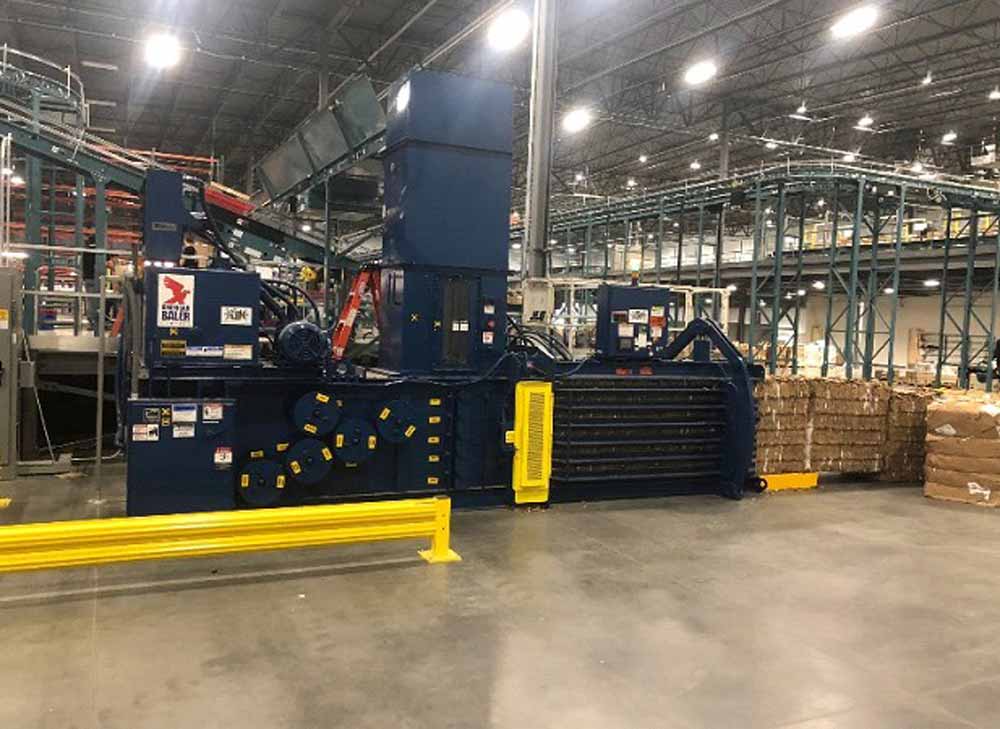
A horizontal baler uses a ram that moves along a horizontal plane to push material into the baling chamber. Material is fed into a hopper from above by hand, conveyor, forklift, or cart tipper, or directly from a production line. The machine keeps cycling as new material arrives, so it can run continuously.
Horizontal balers come in two main configurations:
- Manual-tie: The operator ties off the bale when the chamber is full. These suit mid-volume operations.
- Auto-tie: The machine wraps, ties, and ejects bales automatically. These are built for high-volume, continuous operations.
Key characteristics of horizontal balers:
- High throughput: Continuous feeding lets them process large volumes every shift.
- Larger, denser bales: Horizontal balers typically produce bigger bales that recyclers and mills often prefer.
- Automation options: Conveyors, auto-tie systems, and integration with sorting equipment reduce labor.
- Larger footprint: They need room for the machine, the infeed, and bale removal.
- Higher investment: Purchase price, installation, and electrical requirements are all greater than for vertical models.
Horizontal balers are common in distribution centers, large warehouses, manufacturing plants, recycling facilities, and large retail operations.
Horizontal Baler vs. Vertical Baler: Side-by-Side Comparison
The table summarizes the general differences. Exact specifications vary by model, so confirm details for any specific machine.
| Factor | Vertical baler | Horizontal baler |
|---|---|---|
| Best for | Low to moderate volume | Moderate to high volume |
| Throughput | Batch cycles, limited by manual loading | Continuous feeding, much higher per shift |
| Footprint | Small floor area; needs ceiling height | Large floor area plus infeed and bale removal space |
| Loading | Manual, by hand | Hopper fed by hand, conveyor, forklift, or cart tipper |
| Tying | Manual | Manual or automatic |
| Bales | Smaller and lighter | Larger and denser |
| Materials | Cardboard, film, paper, cans (varies by model) | Same range, plus mixed streams from sorting lines |
| Labor per bale | Higher | Lower, especially with auto-tie |
| Upfront cost | Lower | Higher, especially with conveyors or auto-tie |
When Should You Choose a Vertical Baler?
Choose a vertical baler when your volume is steady but manageable and floor space is tight. It is generally the right fit when:
- Your facility produces enough cardboard or plastic to fill bales regularly, but not continuously.
- Material is generated in one or two areas, such as a stockroom or receiving dock.
- Staff can load the baler periodically as part of other duties.
- Floor space is limited but ceiling height is adequate.
Where volume is high but space is tight, some facilities place more than one vertical baler near different collection points instead of installing a single horizontal system.
When Should You Upgrade to a Horizontal Baler?
Upgrade to a horizontal baler when manual loading can no longer keep up or labor costs start to outweigh the savings of a cheaper machine. Common signs:
- Loose material piles up faster than staff can bale it.
- One or more employees spend most of their shift loading and tying a vertical baler.
- Material arrives continuously from production lines, sorting systems, or multiple receiving doors.
- You want heavier, denser bales to improve what recyclers pay for your material.
To find where your facility stands, track recyclable volume for several weeks. Hauler invoices, dumpster pickup frequency, and the number of loose cardboard containers on site all help estimate it. An equipment specialist can then translate that data into the right baler type and size.
How Much Space Does Each Baler Need?
Even when volume points toward a horizontal baler, the building may decide the outcome. Check these before choosing equipment:
- Floor area: Vertical balers fit tight spaces. Horizontal balers need room for the machine, the hopper or conveyor, and bale ejection.
- Ceiling height: Vertical balers need overhead clearance for the ram and loading door. Low ceilings limit model options.
- Bale handling: Larger horizontal bales require forklift access and staging space until pickup.
- Traffic flow: Material should move from where it is generated to the baler without disrupting operations.
- Electrical service: Horizontal balers often require three-phase power, while many vertical models run on more common service. Confirm available power before buying.
- Indoor or outdoor placement: Equipment placed outdoors or in a separate recycling area needs weather protection and clear access.
Should You Consider an Auto-Tie Horizontal Baler?
An auto-tie horizontal baler makes sense when volume is high enough that tying bales by hand becomes a bottleneck. The machine ties and ejects each bale on its own, so operators only keep the infeed supplied. It costs more than a manual-tie model, so the labor savings need to justify the premium. That usually happens in distribution centers, recycling facilities, and plants running material through the baler all day.
How Do Labor, Cost, and ROI Compare?
Purchase price is only one part of the total cost of ownership. Weigh these factors together:
- Equipment and installation: Vertical balers cost less upfront. Horizontal balers are a larger investment, especially with conveyors or auto-tie systems.
- Labor: Vertical balers take more hands-on time per bale. In high-volume operations, the labor a horizontal baler saves can offset its higher price.
- Hauling: Both types cut trash pickups by pulling bulky recyclables out of the waste stream.
- Recycling revenue: Denser, heavier bales are often worth more to recyclers and mills.
- Maintenance: Every baler needs routine maintenance. Horizontal systems have more components, so a planned maintenance schedule matters even more for avoiding downtime.
If budget is the constraint, quality used equipment can be a lower-cost path to either baler type. Look for machines that have been properly inspected and repaired, not just cleaned and painted.
What Else Should You Consider?
- Material type: Cardboard is the most common baled material, but facilities also bale plastic film, shrink wrap, paper, aluminum, textiles, and foam. Some materials require specific baler designs or press force.
- Mixed streams: Facilities separating several recyclables may need a baler that switches between materials efficiently, or more than one machine.
- Buyer requirements: Some recyclers set minimum bale weights or size preferences. Confirm these before selecting equipment.
- Safety features: Look for interlocked doors, emergency stop controls, and clear operating instructions, and train every operator.
- Growth plans: If volume is likely to rise, extra capacity now can prevent an early replacement.
- Service support: Reliable service and parts availability keep downtime short when repairs are needed.
Frequently Asked Questions
What is the difference between a horizontal and vertical baler?
The difference is the direction of compression and the scale of operation. Vertical balers press material from the top down and are loaded by hand in batches, which suits lower volumes and smaller spaces. Horizontal balers press from the side, accept continuous feeding from hoppers or conveyors, and are built for higher volumes and facilities with more floor space.
Do horizontal balers produce heavier bales?
In most cases, yes. Horizontal balers generally produce larger, denser bales than vertical balers. Heavier bales can improve what recyclers pay for your material and reduce transportation costs per ton, though exact bale weights depend on the model and the material being baled.
Can a vertical baler handle materials other than cardboard?
Many vertical balers can process plastic film, paper, aluminum cans, and other recyclables in addition to cardboard. Capabilities vary by model and press force, so confirm that the baler you are considering is rated for each material your facility plans to bale.
Is a horizontal baler worth it for a mid-size business?
It depends on daily volume and labor costs. If employees spend a large part of their shift loading and tying a vertical baler, or material piles up faster than it can be processed, a horizontal baler may pay for itself through labor savings and higher bale values. If neither is happening, a vertical baler is usually the better value.
Should I consider a used baler?
A used baler can be a cost-effective option if it has been professionally inspected and worn components have been repaired or replaced. Ask what work was done, what warranty is included, and whether parts and service are available. Avoid equipment that has only been cleaned and painted.
Find the Right Baler for Your Volume and Space
Choosing between a horizontal and vertical baler is easier with a partner who understands waste streams, facility layouts, and long-term operating costs. Action Compaction Equipment sells new and used recycling equipment nationwide, including vertical, horizontal, and auto-tie balers, and provides installation, repair, and preventive maintenance.
Call 801-565-1033 to request a quote and talk with a specialist about the right baler for your facility.
Recent Comments