
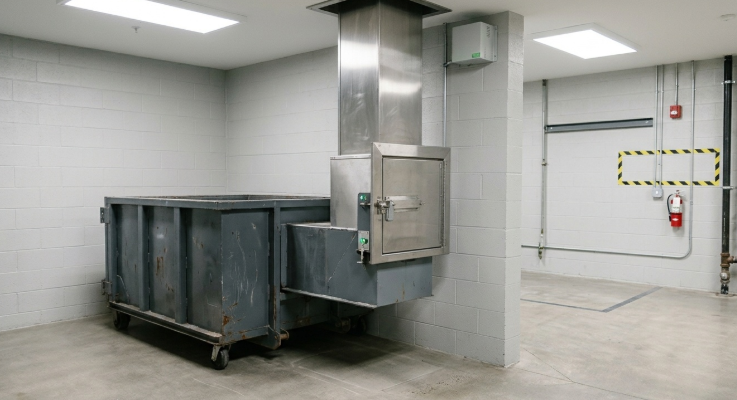
Trash chute maintenance is a scheduled routine of cleaning, deodorizing, and inspecting a building’s chute system so it stays sanitary, odor-free, and fire-safe. Staff handle daily and weekly tasks like wiping intake doors and sanitizing the discharge room, while a professional deep cleaning of the full chute interior happens quarterly to annually, depending on use.
Trash chutes in apartment buildings, condominiums, hotels, hospitals, dormitories, and office towers handle waste from every floor, every day. Residue from food, liquids, and torn bags coats the interior walls over time, and the result is odor, pests, and extra strain on the compactor below. This guide covers what causes chute problems, a complete maintenance checklist, how a professional cleaning works, and when to call for service.
Why Does Trash Chute Maintenance Matter?
A chute is an enclosed shaft that runs the full height of a building, so anything that builds up inside it affects every floor. Neglect causes problems well beyond a bad smell:
- Odor migration: Odors rise through the shaft and escape through intake doors into hallways and common areas.
- Pests: Food residue and moisture attract cockroaches, flies, and rodents, which can move from the chute into occupied spaces.
- Bacteria and mold: Warm, damp organic buildup supports bacterial and mold growth that can affect indoor air quality.
- Fire risk: Grease and paper clinging to chute walls are combustible. That is why chutes are typically protected by sprinklers and self-closing, fire-rated doors, and those components have to keep working.
- Equipment wear: Blockages and debris put added strain on intake doors, the discharge door, and the compactor at the base of the chute.
- Tenant satisfaction: A clean, odor-free waste system is one of the details residents and guests notice, and complaints about it are hard to ignore.
What Causes Trash Chute Odors and Buildup?
Most chute problems trace back to a handful of predictable sources. Fixing the cause is more effective than masking the symptom.
| Cause | What happens | How to prevent it |
|---|---|---|
| Unbagged waste or torn bags | Loose waste and liquids smear the walls on the way down | Require tied, properly sized bags |
| Food waste and liquids | Organic residue decomposes quickly, especially in warm weather | Drain liquids before disposal; deodorize the discharge room weekly |
| Grease and oily residue | Forms a sticky layer that traps other debris and adds fire load | Schedule professional degreasing at regular intervals |
| Prohibited or bulky items | Boxes, hangers, and glass lodge in the shaft and catch waste above them | Post clear disposal rules at every intake door |
| Poor ventilation | Odors and moisture linger instead of exhausting through the top vent | Keep the roof vent clear and inspect it regularly |
| Overfull collection area | Waste backs up from the compactor or bin into the chute | Empty or swap containers on a set schedule |
Trash Chute Maintenance Checklist: Daily to Annual Tasks
The most reliable approach splits chute care into daily, weekly, monthly, and periodic tasks. Adjust the frequency to building size, occupancy, and waste type. A hotel or hospital usually needs more attention than a small office building.
Daily Tasks
- Wipe intake doors, handles, and frames on each floor to remove spills and residue.
- Check that every intake door closes and latches fully.
- Empty or rotate the collection bin or compactor container before it overfills.
- Sweep and clean the discharge room floor.
Weekly Tasks
- Sanitize the discharge area and the exterior of the compactor or collection bin.
- Inspect the discharge door and the base of the chute for accumulated debris.
- Apply an approved deodorizer or enzyme treatment in the discharge room.
- Look for droppings or insect activity and report pests promptly.
Monthly Tasks
- Inspect intake door hinges, closers, and latches for wear.
- Check visible sections of the chute interior with a flashlight for buildup or blockages.
- Confirm any installed odor control system is running and stocked with supplies.
Quarterly to Annual Tasks
- Schedule a professional deep cleaning of the full chute interior. High-use buildings often need it quarterly; lower-use properties may need it semiannually or annually.
- Have qualified technicians inspect fire suppression components, fire-rated doors, and the compactor.
How Do You Clean a Trash Chute?
Staff can clean intake doors and the discharge room, but the full interior of a chute requires a professional cleaning with equipment built for vertical shafts. Methods vary by provider, but a typical service follows these steps:
- Pre-inspection: Technicians check the chute for blockages, damage, and the level of buildup.
- Securing the system: Intake doors are closed and posted out of service, and the collection area is set up to catch wastewater and debris.
- Pressure washing: A rotating spray head is lowered from the top of the chute, washing the walls from top to bottom with hot water.
- Degreasing and sanitizing: Commercial degreasers and disinfectants break down grease and kill odor-causing bacteria.
- Deodorizing: A final treatment neutralizes remaining odors instead of masking them.
- Cleaning the base: The discharge door, collection area, and surrounding floor are cleaned and sanitized.
- Service report: Many providers document the chute’s condition and note any needed repairs.
Regular intervals matter. Residue that is removed before it hardens comes off faster, so each cleaning is quicker and more effective.
How Do You Control Trash Chute Odors Between Cleanings?
Odor control between deep cleanings comes down to three things: removing the source, keeping air moving, and treating the waste room. Fragrance alone only covers the problem for a short time.
- Enzyme and deodorizer treatments: Applied in the discharge room and on the collection equipment, these break down organic residue rather than perfuming over it.
- Dedicated odor control systems: Installed in the chute or waste room, these units treat the air automatically on a set cycle, which removes the need for staff to remember manual applications.
- Ventilation: A clear roof vent lets air and odors exhaust out of the building instead of escaping through intake doors.
- Collection schedule: Emptying the compactor container on time keeps waste from sitting at the base of the chute.
- Closed intake doors: Doors that latch fully keep odors in the shaft and out of hallways.
What Should You Inspect on Doors, Fire Safety Components, and Equipment?
Cleanliness is only part of trash chute maintenance. The mechanical and fire safety components need regular checks too.
- Intake doors: Self-closing, self-latching doors contain odors and fire. Repair any door that sticks, fails to latch, or is being propped open.
- Discharge door: The door at the base of the chute is commonly held open by a fusible link designed to release and close the door in a fire. Make sure the link and closing mechanism are intact and unobstructed.
- Sprinkler heads: Chute sprinklers must be free of debris and damage. Inspection and testing should follow local fire code and be performed by qualified professionals.
- Roof vent: Keep the vent at the top of the chute clear so air and odors exhaust properly.
- Compactor: A compactor that jams or cycles slowly backs waste up into the chute. Planned maintenance on the hydraulics, ram, and controls keeps the full system moving.
- Odor control units: Confirm they are operating as designed.
Keep a written record of every inspection. It supports fire code compliance and makes recurring problems easier to spot.
Chute Rules for Residents and Staff
Even the best maintenance schedule depends on how people use the chute. Post these rules near every intake door:
- Bag all waste and tie bags closed.
- Drain liquids and don’t drop loose food scraps.
- Never put cardboard boxes, glass, hangers, aerosol cans, or bulky items in the chute.
- Never dispose of hazardous materials, lit cigarettes, or hot ashes.
- Use bags that fit through the intake door without forcing.
- Close the intake door completely after each use.
- Report odors, jams, or damaged doors to building management right away.
Reinforce the rules through signage, move-in materials, and periodic reminders. Staff training should cover approved cleaning products, safety precautions, and what to do when a blockage occurs.
When Should You Call for Trash Chute Service?
Call a qualified service provider when routine cleaning no longer solves the problem. Warning signs include:
- Odors that return shortly after cleaning
- Frequent blockages or waste backing up to upper floors
- Intake or discharge doors that no longer close or latch
- Visible rust, dents, or separated seams in the chute
- Ongoing pest activity near intake doors or the discharge room
- A compactor that jams, leaks hydraulic fluid, or cycles slowly
- Repeated tenant complaints about hallway odors
Catching these issues early usually costs less than waiting for a door, compactor, or chute section to fail outright.
Frequently Asked Questions
How often should a commercial trash chute be professionally cleaned?
Most commercial buildings need a professional chute cleaning at least once or twice a year. High-traffic properties such as hotels, hospitals, and large apartment complexes often schedule it quarterly to stay ahead of grease buildup and odors. Increase the frequency if odors return quickly after cleaning or if the building handles a lot of food waste.
Can building staff clean the inside of a trash chute?
Staff can handle daily and weekly tasks like cleaning intake doors, sanitizing the discharge room, and applying deodorizers. Cleaning the full interior of the shaft requires specialized spray equipment, commercial degreasers, and safety procedures for working at the top of the chute, so it is best left to trained professionals.
Are trash chutes a fire hazard?
A chute can carry fire risk when grease and paper accumulate on its walls or when fire safety components fail. Regular cleaning, sprinklers that are inspected and free of debris, intake doors that self-close and latch, and a working fusible link on the discharge door all reduce that risk. Follow local fire code for inspection intervals.
Does the compactor affect chute performance?
Yes. The compactor at the base of the chute has to keep pace with incoming waste. A poorly maintained or undersized compactor causes backups into the chute, which leads to odors, blockages, and added wear on doors. Matching compactor capacity to the building’s waste volume and keeping it on a maintenance plan prevents most of these problems.
Keep Your Chute System Clean, Odor-Free, and Working
A well-maintained chute protects your building, your occupants, and your operating budget. Action Compaction Equipment supplies trash chutes, odor control systems, and industrial compactors for the base of your chute, along with installation, repair, and preventive maintenance for waste and recycling equipment.
Whether you need a new chute system, a compactor that keeps up with your building’s waste, or an odor control solution for your waste room, our team can help you choose the right equipment. Call 801-565-1033 to request a quote.
Recent Comments