Efficient waste management is one of the most overlooked aspects of running a business. Yet, it plays a critical role in reducing costs, maintaining a clean environment, and ensuring compliance with regulations. One of the most effective tools available for businesses today is the commercial trash compactor. These machines streamline waste handling, reduce volume, and improve sanitation, all while saving money over the long term.
Why Businesses Need Better Waste Management
Every business, whether a restaurant, retail store, hospital, manufacturing, fulfillment or office buildings, generates waste. For many, the default approach is to simply increase the number of dumpsters or schedule more frequent waste pickups. While this may temporarily solve the problem, it’s not cost-effective or sustainable in the long term.
Overflowing dumpsters can create unsanitary conditions, attract pests, allow for wind blow debris, and even violate local health codes. High-volume waste removal contracts also drive up operational costs. On top of that, companies today are under greater pressure to adopt environmentally responsible practices, making waste reduction and recycling a priority.
A commercial trash compactor provides a solution by compressing waste into denser, heavier and more manageable loads. This reduces the number of pickups required and frees up space, all while promoting a cleaner and safer professional environment.
What Is a Commercial Trash Compactor?
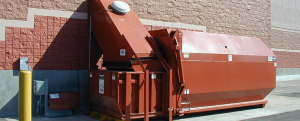
A commercial trash compactor is a hydraulic machine designed to compress material into a container which will reduce the density or volume of what is being disposed of and saves space and the associated disposal costs.
Commercial compactors come in different configurations, including:
- Stationary compactors – Ideal for dry waste such as cardboard, paper, and general trash.
- Pre Crusher Compactors – Ideal for volume reduction and destruction of bulky and large materials. It hydraulically pre-crushes materials in the compactor chamber before compressing it into the container.
- Self-contained compactors – Suited for businesses producing wet waste, such as food waste, food production and restaurants and supermarkets.
- Vertical compactors – Best for smaller spaces where a full-size compactor may not fit. Compacts into a dumpster sized container that is emptied by a typical front-load truck.
Each type addresses specific business needs and applications, making compactors application-specific rather than one-size-fits-all solutions.
Benefits of Using a Commercial Trash Compactor
1. Cost Savings
The most immediate benefit is a reduction in waste hauling expenses. By compacting trash, businesses can cut down on the number of scheduled pickups, resulting in lower monthly trash hauling bills.
2. Space Optimization
Trash compactors takes up far less space than containers for loose waste. This frees up valuable real estate inside and outside your business and maintains a cleaner environment.
3. Improved Sanitation
Enclosed compactors help prevent odors from escaping and reduce exposure to pests. For restaurants, hotels, or healthcare facilities, this is especially important for maintaining health and safety standards. Also a great option for dock fed compactors in areas where there is snow or in climate weather.
4. Environmental Responsibility
By reducing the number of waste pickups, businesses lower their carbon footprint. Many compactors or a recycling baler can also be integrated with recycling programs, helping companies meet sustainability goals.
5. Enhanced Safety
Loose trash creates hazards and risk of injury for employees and customers alike. With a compactor safety and ease of feeding considered, waste is contained securely, reducing the risk of accidents, spills, or contamination.
What Distinguishes a Commercial Trash Compactor from an Industrial One?
Although the terms are sometimes used interchangeably, commercial and industrial trash compactors serve different purposes:
- Commercial Compactors
- Designed for businesses such as restaurants, retail stores, apartment complexes, and offices.
- Handle moderate to high volumes of waste, often a mix of dry and wet materials.
- Prioritize cost savings, sanitation, and ease of use.
- Available in compact sizes for space-limited operations.
- Industrial Compactors
- Built for heavy-duty environments like manufacturing plants, distribution centers, or warehouses.
- Handle bulkier, heavier, and more rugged materials such as wood pallets, metals, and construction debris.
- Require more space and higher power capacity.
- Focus on durability and extreme load handling rather than convenience.
In short, commercial compactors are tailored for day-to-day business waste, while industrial compactors are engineered for large-scale, heavy material reduction.
How Can a Commercial Trash Compactor Improve My Business’s Waste Management?
The right compactor transforms waste handling from a logistical headache into a streamlined, cost-efficient process. Here’s how:
- Lower Hauling Costs – Fewer pickups mean significant savings each month. Many businesses see a quick return on investment within the first year.
- Cleaner Work Environment – Enclosed units prevent windblown trash and reduce foul odors, keeping your premises clean and inviting.
- Better Compliance – In industries where cleanliness is regulated (such as food service or healthcare), compactors make compliance easier.
- Recycling Integration – Many businesses pair compactors with balers for cardboard, plastics, and other recyclables, reducing landfill contributions.
- Operational Efficiency – Employees spend less time managing trash, freeing them to focus on core responsibilities.
For businesses that generate consistent waste, a commercial trash compactor is not just a convenience; it’s a strategic investment.
What Factors Should I Consider When Selecting a Commercial Trash Compactor?
Choosing the right compactor is not a one-size-fits-all decision. Several factors should guide your selection:
1. Type of Waste Generated
- If your business produces mostly dry waste (like cardboard, packaging and general trash), a stationary compactor is ideal.
- For operations dealing with wet waste (like food scraps), a self-contained compactor fully contains the waste and liquid, preventing leaks and odors.
2. Volume of Waste
Waste stream content and size are some things to consider when selecting a compactor.
for low volume a vertical compactor may work well, for mid to high-volume businesses there are various sizes and types of compactors to best collect and handle it.
3. Available Space
Do you have limited outdoor or indoor space? Compact, vertical units can fit where larger machines cannot. Conversely, businesses with ample outdoor space may prefer larger stationary units with roll-off containers.
4. Budget and ROI
While upfront costs vary, remember that compactors quickly pay for themselves in reduced hauling fees and labor savings. A lease to own can be a good option if an upfront purchase is not budget friendly.
5. Local Regulations
Certain municipalities may have rules governing waste disposal, recycling, or noise restrictions and wind blow trash or debris. Ensure the unit you choose complies with local requirements.
6. Maintenance and Service Support
A compactor is a long-term investment, so ongoing support is essential. Planned maintenance will extend the life of the machine, and can catch wear related issues before a breakdown occurs. We are on call for mobile service and offer a great planned maintenance program.
Action Compaction: Your Trusted Partner in Waste Management
At Action Compaction, we understand that compactors and recycling equipment are application-specific. What works for one business may not work for another. That’s why we take pride in providing tailored solutions, from design and installation to ongoing service and support.
Our expert team is also available for mobile service, on site repairs, rebuild and fabrication services and planned maintenance. All of this will help ensuring your equipment remains in peak performance condition and meets safety standards . Based in the Intermountain West, we proudly serve Utah and surrounding states, while also selling compactors nationwide. Regardless of the industry or business size, we have the equipment options and expertise to improve your waste management strategy.
Take Action Today
Waste management doesn’t have to be a costly, messy, or time-consuming problem. A commercial trash compactor can transform how your business handles waste, cutting costs, improving sanitation, safety, and supporting sustainability goals.
If you’re ready to optimize your waste management system, partner with Action Compaction. We’ll help you select, install, and maintain the right equipment for your unique needs.
Recent Comments